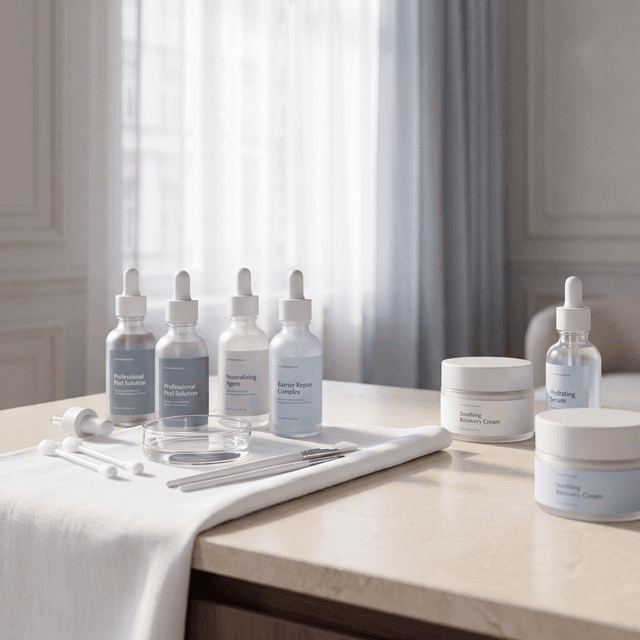
Quick Answer After a chemical peel, your skin's protective barrier is temporarily weakened — which is exactly why peeling, redness, and sometimes breakouts appear. If the skin doesn't get proper aftercare during this window (hydration, sun protection, avoiding harsh products), the results of the procedure can be diminished and the risk of complications — including hyperpigmentation — increases. Depending on the depth of the peel, recovery takes anywhere from 1 day to 3 weeks.
What Happens to Your Skin After a Chemical Peel During a chemical peel, an acid-based solution is applied to the skin's surface, triggering exfoliation and cell renewal. The procedure can be superficial, medium-depth, or deep — and the deeper the peel, the more critical the recovery phase becomes. After the procedure, the skin's natural protective layer thins out, which in practice means: Skin loses moisture faster than usual Sensitivity to sun, wind, and environmental factors increases Breakouts, redness, and mild swelling may appear The risk of hyperpigmentation and scarring rises if aftercare is inadequate
Most Common Questions About Post-Peel Skin (Answered) How long does peeling last after a chemical peel? It depends on the type of procedure. After a superficial peel, flaking typically lasts 2–4 days; after a medium-depth peel, 5–7 days; after a deep peel, the process can continue for 2–3 weeks.
Why did I break out after my peel? Breakouts are a common — though not always "normal" — side effect of chemical peels. The cause can be an allergic reaction, incorrect aftercare, or individual sensitivity to a product. If breakouts don't settle within 3–4 days, it's important to consult a specialist.
How long should I avoid sun exposure after a peel? For at least 2–4 weeks, daily SPF 30+ (SPF 50 is preferable) is essential, along with minimizing direct sun exposure as much as possible. This period is especially critical for preventing pigmentation.
Why do redness and swelling appear? Redness and mild swelling are a natural reaction, since the procedure actively affects the upper layers of the skin. These symptoms usually subside within 24–72 hours — if they don't, a consultation is recommended.
Can I wear makeup after the procedure? Not before 24–48 hours have passed, and only with mineral or hypoallergenic products.
How to Care for Your Skin After a Peel — Practical Tips 1. Gentle cleansing, not harsh Use a pH-balanced cleanser, avoiding hot water and friction. Scrubs and mechanical exfoliants are completely off-limits during the recovery period.
. Intensive hydration Creams containing panthenol, bisabolol, and hyaluronic acid speed up skin healing and regeneration. Moisturizing 2–3 times a day is the minimum standard.
Sun protection — every day, no exceptions This is the single factor that most determines whether the procedure will deliver the results you want in the long run.
Temporarily limit active ingredients Throughout the recovery period, avoid retinol, AHA/BHA acids, and high concentrations of vitamin C — these can be reintroduced only once the skin has fully healed.
Avoid intense exercise and sauna Intense workouts and high heat (sauna, steam room) intensify irritation — it's recommended to postpone these for 3–5 days.
Why Recovery Should Be Guided by a Specialist Post-peel complications — persistent hyperpigmentation, scarring, infection — are almost always linked to incorrect or insufficient aftercare, not the procedure itself. After a chemical peel at VELÈ, every patient receives individual recommendations based on skin type and the depth of the procedure — significantly reducing the risk of complications.
Where We Are and How to Book a Consultation VELÈ is located in Saburtalo, at 4 Otar Oniashvili Street, near Gagarin Square — easily accessible from anywhere in Saburtalo. If you're looking for a chemical peel in Saburtalo or want a consultation about your recovery process, book a visit or get in touch. For further questions, see our FAQ or explore all our procedures.
Conclusion The outcome of a facial peel depends not only on the quality of the procedure itself, but also on how you care for your skin in the days that follow. Proper recovery — gentle cleansing, intensive hydration, sun protection, and temporarily limiting active ingredients — is what separates a good result from an average one.